Plastics Resin Codes
Just like people, plastics come in all shapes and sizes. Understanding these materials is the first step toward better waste management and compliance.
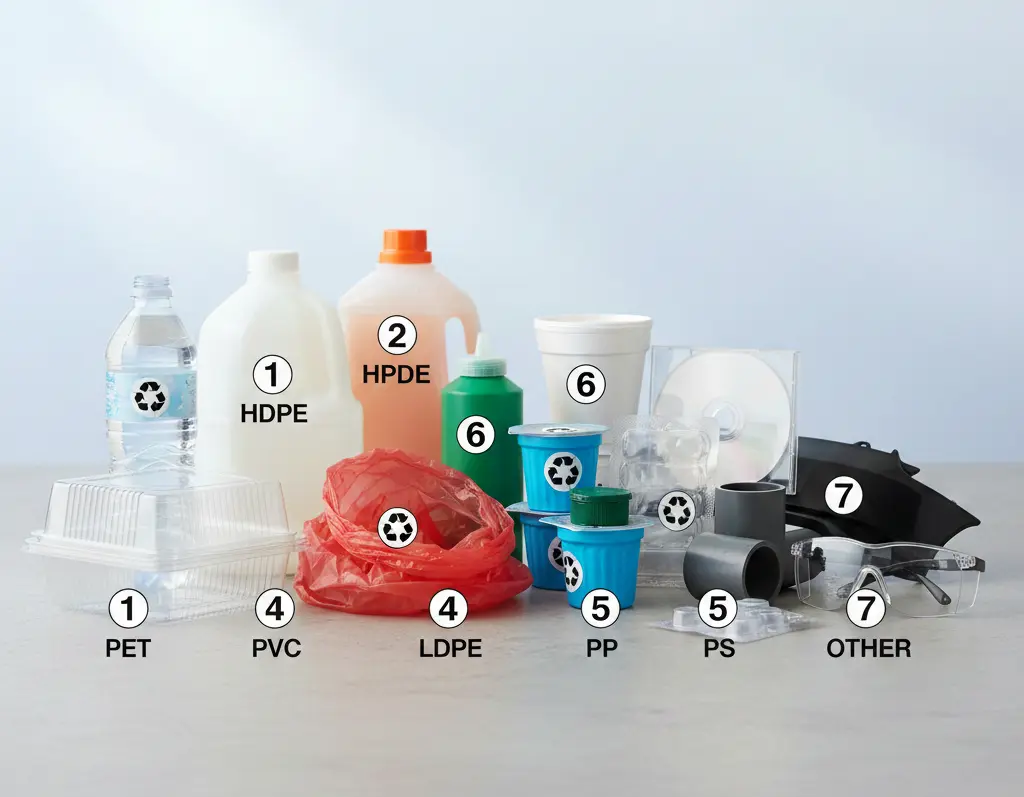
At their core, plastics are polymers—large molecules created by linking smaller units called monomers together. In the manufacturing world, we generally divide plastics into two main categories: Rigid/Hard Plastics and Flexible/Polythene Plastics.
Under the Extended Producer Responsibility (EPR) Regulations of 2024, producers are now held accountable for the entire lifecycle of these materials. Access EPR Resource →
1. Rigid Plastics Packaging
Strong, durable, and designed to maintain shape. These are engineered to protect contents from physical impact and allow for easy stacking.
Examples: Beverage bottles, detergent jugs, yogurt tubs, crates, and bottle caps.
Why use it? Ideal for premium beverages or long-shelf-life foods due to its excellent barrier properties.
2. Flexible Plastics Packaging
Non-rigid and easily shaped or folded. Often called "soft plastics," these are produced in thin sheets or rolls with thickness measured in microns.
Examples: Bread bags, salt packets, cling film, courier bags, snack pouches, and shopping bags.
Why use it? It is lightweight and cost-effective, perfect for fresh produce and electronics.
Following Kenya's ban on flexible plastic packaging, NEMA has issued specific guidance via the Plastic Packaging Regulations, 2024. Producers, manufacturers, and importers must apply for a license. Learn more about NEMA licensing →
The 7 Types of Plastic: What You Need to Know
Since you can't always tell the type of plastic just by looking at it, the industry uses Resin Identification Codes—those small numbers inside a triangle. These identify the specific resin used in production.
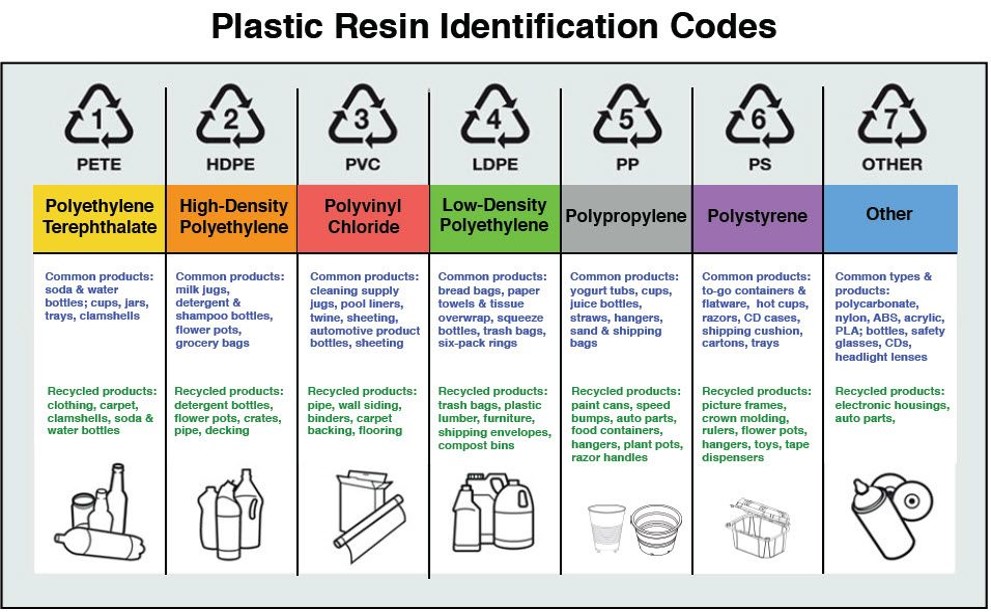
PET or PETE (Polyethylene Terephthalate)
Clear, strong, and lightweight. The gold standard for beverages because it keeps carbonation in and oxygen out.
Common uses: Soda/water bottles, cooking oil containers.
Recyclable: Yes (100%)HDPE (High-Density Polyethylene)
A "tough" plastic with long, straight polymer chains making it denser and stronger than PET.
Common uses: Milk jugs, shampoo bottles, water pipes, and trash cans.
Recyclable: Yes (Highly Stable)PVC (Polyvinyl Chloride)
Highly durable material used in both rigid forms (pipes) and flexible forms (cable insulation). Resistant to elements.
Common uses: Window frames, plumbing pipes, and flooring.
Recyclable: Difficult (Chemical concerns)LDPE (Low-Density Polyethylene)
The flexible sibling of HDPE. Very resistant to acids and oils; does not break easily.
Common uses: Squeeze bottles, shrink wrap, and grocery bags.
Recyclable: Sometimes (Facility dependent)PP (Polypropylene)
Known for high heat resistance. If it's "microwave safe," it's likely PP.
Common uses: Yogurt tubs, bottle caps, straws, and storage crates.
Recyclable: YesPS (Polystyrene)
Commonly known as Styrofoam. Lightweight and inexpensive but structurally fragile.
Common uses: Disposable coffee cups, meat trays, and packing peanuts.
Recyclable: Hard (High transport costs)Other (Laminates & Mixed Plastics)
Materials that don't fit other categories, typically multi-layered packaging like laminates.
Common uses: Crisp packets, snack packaging, or plastic-coated paper.
Recyclable: Rarely (Difficult to separate)| CODE | ABBR. | FULL NAME | CHARACTERISTICS | EXAMPLES | RECYCLABLE? |
|---|---|---|---|---|---|
| 1 | PET | Polyethylene terephthalate | Transparent, chemical resistant, durable and strong, wide range of uses. | Water and soda bottles. | Yes. |
| 2 | HDPE | High-Density Polyethylene | Opaque and milky, weather resistant, high tensile strength. | Milk jugs, bottle caps, recycling bins. | Yes. |
| 3 | PVC | Polyvinyl Chloride | Fire resistant, light, strong and durable. | Pipes, window profiles, insulation. | Yes, but needs specialized processes. |
| 4 | LDPE | Low-Density Polyethylene | Chemical/impact resistant, lightweight and flexible. | Bread bags, shrink wrap, squeezable bottles. | Yes, but only a few times. |
| 5 | PP | Polypropylene | Heat-resistant, translucent, chemical resistance. | Yogurt tubs, microwaveable containers. | Yes, but rarely. |
| 6 | PS | Polystyrene | Transparent, good electrical insulator. | Disposable coffee cups, CD cases. | Yes, but needs specialized equipment. |
| 7 | OTHER | Various | Multilayers, composites, bioplastics. | Crisp wrappers, baby bottles. | No. |