
Thought Leadership
Can Technology and Sustainability Coexist?
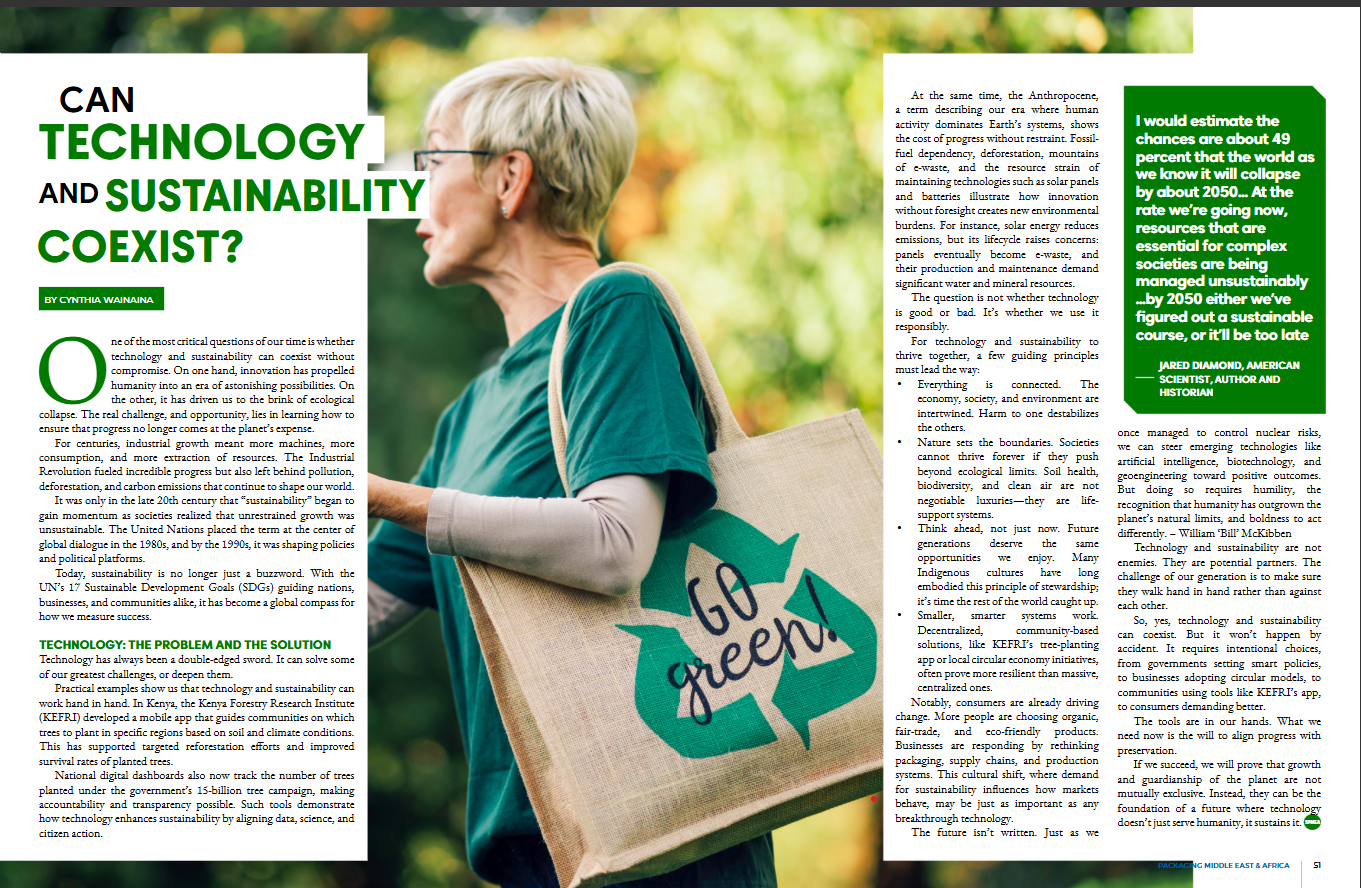
One of the most critical questions of our time is whether technology and sustainability can coexist without compromise. On one hand, innovation has propelled humanity into an era of astonishing possibilities. On the other hand, it has driven us to the brink of ecological collapse. The real challenge, and opportunity, lies in learning how to ensure that progress no longer comes at the planet’s expense.
For centuries, industrial growth meant more machines, more consumption, and more extraction of resources. The Industrial Revolution fueled incredible progress but also left behind pollution, deforestation, and carbon emissions that continue to shape our world.
It was only in the late 20th century that “sustainability” began to gain momentum as societies realized that unrestrained growth was unsustainable. The United Nations placed the term at the center of global dialogue in the 1980s, and by the 1990s, it was shaping policies and political platforms.
The Global Compass
Today, sustainability is no longer just a buzzword. With the UN’s 17 Sustainable Development Goals (SDGs) guiding nations, businesses, and communities alike, it has become a global compass for how we measure success.
Technology: The Problem and the Solution
Technology has always been a double-edged sword. It can solve some of our greatest challenges, or deepen them.
Practical examples show us that technology and sustainability can work hand in hand. In Kenya, the Kenya Forestry Research Institute (KEFRI) developed a mobile app that guides communities on which trees to plant in specific regions based on soil and climate conditions. This has supported targeted reforestation efforts and improved survival rates of planted trees.
National digital dashboards also now track the number of trees planted under the government’s 15-billion-tree campaign, making accountability and transparency possible. Such tools demonstrate how technology enhances sustainability by aligning data, science, and citizen action.
The Anthropocene Challenge
The Anthropocene, a term describing our era where human activity dominates Earth’s systems, shows the cost of progress without restraint. Fossil fuel dependency, deforestation, mountains of e-waste, and the resource strain of maintaining technologies such as solar panels and batteries illustrate how innovation without foresight creates new environmental burdens.
Guiding Principles for the Future
The question is not whether technology is good or bad. It’s whether we use it responsibly. For technology and sustainability to thrive together, a few guiding principles must lead the way:
Everything is connected
The economy, society, and environment are intertwined. Harm to one destabilizes the others.
Nature sets the boundaries
Societies cannot thrive forever if they push beyond ecological limits. Soil health, biodiversity, and clean air are not negotiable luxuries—they are life-support systems.
Think ahead, not just now
Future generations deserve the same opportunities we enjoy. Many Indigenous cultures have long embodied this principle of stewardship; it’s time the rest of the world caught up.
Smaller, smarter systems work
Decentralized, community-based solutions, like KEFRI’s tree-planting app or local circular economy initiatives, often prove more resilient than massive, centralized ones.
Driving Change
Notably, consumers are already driving change. More people are choosing organic, fair-trade, and eco-friendly products. Businesses are responding by rethinking packaging, supply chains, and production systems. This cultural shift, where demand for sustainability influences how markets behave, may be just as important as any breakthrough technology.
The future isn’t written. Just as we once managed to control nuclear risks, we can steer emerging technologies like artificial intelligence, biotechnology, and geoengineering toward positive outcomes. But doing so requires humility, the recognition that humanity has outgrown the planet’s natural limits, and boldness to act differently.
"I would estimate the chances are about 49 percent that the world as we know it will collapse by about 2050... At the rate we’re going now, resources that are essential for complex societies are being managed unsustainably... by 2050, either we’ve figured out a sustainable course, or it’ll be too late."
Conclusion
Technology and sustainability are not enemies. They are potential partners. The challenge of our generation is to make sure they walk hand in hand rather than against each other.
So, yes, technology and sustainability can coexist. But it won’t happen by accident. It requires intentional choices, from governments setting smart policies, to businesses adopting circular models, to communities using tools like KEFRI’s app, to consumers demanding better.
The tools are in our hands. What we need now is the will to align progress with preservation. If we succeed, we will prove that growth and guardianship of the planet are not mutually exclusive. Instead, they can be the foundation of a future where technology doesn’t just serve humanity, it sustains it.
Article Source
This article was initially published by Sustainable Packaging Middle East & Africa Magazine - Issue 9 on Oct 9, 2025.