Opinion Article
EPR's Potential to Transform Kenya's Environment and Economy
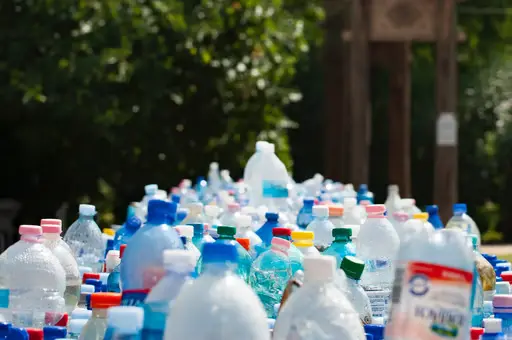
Did you know that only 8% of Kenya's plastic is recycled, while the rest ends up polluting the environment? With an estimated 37,000 tons of plastic leaking into the ocean every year (Kenya Plastics Pact, 2022), it's clear that something needs to change. Consequently, plastic pollution is drowning the nation; clogging roads and waterways, deteriorating ecosystems and destroying animal feeds. Plastic was popularised due to its durability; however, this asset is also plastic's biggest weakness, with environmental degradation of the material exceeding 5 human lifetimes in some cases, making this a long-term problem. Although progress has been made through the plastic bag ban and other means, further action is necessary to establish the groundwork for a sustainable future in waste management, and a transfer to a circular economy. This comes in the form of EPR.
Understanding EPR
EPR is a strategy which adds all estimated environmental costs associated with a product to the market price of that product, ultimately operationalising the "polluter pays" principle. It also involves paying a fee annually as an environmental contribution. This total sum of money is used to deal with waste, in the form of recycling technology, waste collection and waste segregation. While increased prices may seem daunting to citizens who are already concerned about rising living costs, this will be minimal (around 0.1%) but result in substantial environmental restoration and growth. Furthermore, this cost will be based on the producer's environmental damage, thus encouraging cleaner, more efficient production, and lower market prices. Implementing the Extended Producer Responsibility (EPR) model within environmental laws and Kenya's legal framework has the potential to accelerate its nascent waste management infrastructure.
A Comprehensive Solution
EPR is a promising solution for Kenya, as it sidesteps past policy-making challenges and aligns with the waste management act of 2022, while also following the lead of developed countries. Despite the 2019 ban on single-use plastic bags in Kenya, it hasn't been entirely successful, as it has led to the emergence of environmentally damaging alternatives and a thriving black market. Additionally, the poor quality of the alternatives has hindered recycling efforts, leading to continued environmental degradation. EPR, however, offers a more comprehensive approach that holds producers accountable for their products' entire life cycle, encourages sustainable production, and minimizes environmental harm. With EPR, producers have the freedom to create any product, but are also responsible for any environmental damage, and will face financial consequences if they fail to produce sustainable products with longer life cycles.
Success in Europe
This strategy has proved successful in European countries, like Germany, where EPR systems have collected about 2.4 million tonnes of lightweight packaging, and waste management facilities generate over 76 billion € per year (GIZ, 2018).
Economic Opportunities
There is a clear economic opportunity for Kenya here, with a whole new sector to generate capital from. According to the World Economic Forum, the 'lost resource' of plastic waste is valued at up to $120 bn per year (Moore. D, 2021). This massive economic opportunity is accompanied by inevitable provision of jobs, helping to reduce social struggle and the dominance of the informal sector. Job vacancies will become available in enforcing EPR, sorting waste and in MRFs (Materials recovery facilities), providing thousands of residents with a source of income. In Germany, around 290,000 people are employed in the waste management and the secondary raw materials sector (GIZ, 2018)- what's to say Kenya cannot replicate or exceed this? By implementing EPR, Kenya can not only protect its environment, but also take advantage of the economic and social growth which comes alongside this.
Health and Environmental Impact
Children in urban areas and densely populated towns including Kisauni, Dandora and Kangoki, suffer from waste mismanagement and are exposed to toxins at dangerous levels, resulting in respiratory, hormone and fertility issues later in life. Lab analysis testing has shown high levels of persistent organic pollutants (POPs) and dioxins to linger in dumps of plastic waste. These chemicals are regarded as the most toxic substances on the planet, having severe health affects even in small doses, let alone from long-term exposure. The toxins essentially poison ecosystems, accumulating in the food chain and body over time. Innocent people should not be subject to such chemicals, and thus it is our responsibility to reduce the likelihood of situations like this via successful waste management.
Join the Movement
KEPRO has taken the first step towards sustainability by implementing EPR fees for flexible plastics on a voluntary basis. But the real change is yet to come: in 2024, EPR will become mandatory for all producers, in line with the Sustainable Waste Management Act of 2022. That's where you come in. By supporting EPR, we can make a significant difference in creating a cleaner, healthier world for ourselves and future generations. Let's work together to ensure a brighter tomorrow for Kenya. Join the movement for sustainability and support EPR!
References
- Extended producer responsibility (EPR) for managing packaging waste (2018) GIZ (German society for international cooperation-english translation). GIZ. Available at: https://www.giz.de/en/downloads/giz2018_EPR-Packaging_web.pdf (Accessed: April 11, 2023).
- Kombo, P. (2022) Plastic waste is poisoning food and communities across Africa, The Standard. Available at: https://www.standardmedia.co.ke/opinion/article/2001434280/plastic-waste-is-poisoning-food-and-communities-across-africa (Accessed: April 14, 2023).
- Moore, D. (2021) "ground-breaking" Technology to recycle all forms of plastic waste, Circular Online. Available at: https://www.circularonline.co.uk/news/ground-breaking-technology-to-recycle-all-forms-of-plastic-waste/ (Accessed: April 12, 2023).
- The lifecycle of plastics (2021) WWF. WWF Australia. Available at: https://www.wwf.org.au/news/blogs/the-lifecycle-of-plastics (Accessed: April 10, 2023).
- Using the Kenya Plastics Pact roadmap to deal with the Plastics Pollution Headache (2022) Kenya Plastics Pact. Available at: https://kpp.or.ke/2022/08/29/roadmap-to-2030-kenya-plastics-pact-releases-its-national-strategy/ (Accessed: April 12, 2023).
Embracing Circularity
Accelerating Recycling
Closing the Loop